
Understanding Abusive Relationships
Domestic Violence Awareness Month
by Vivian Engle, LMFT
Clinician, JFS Hope
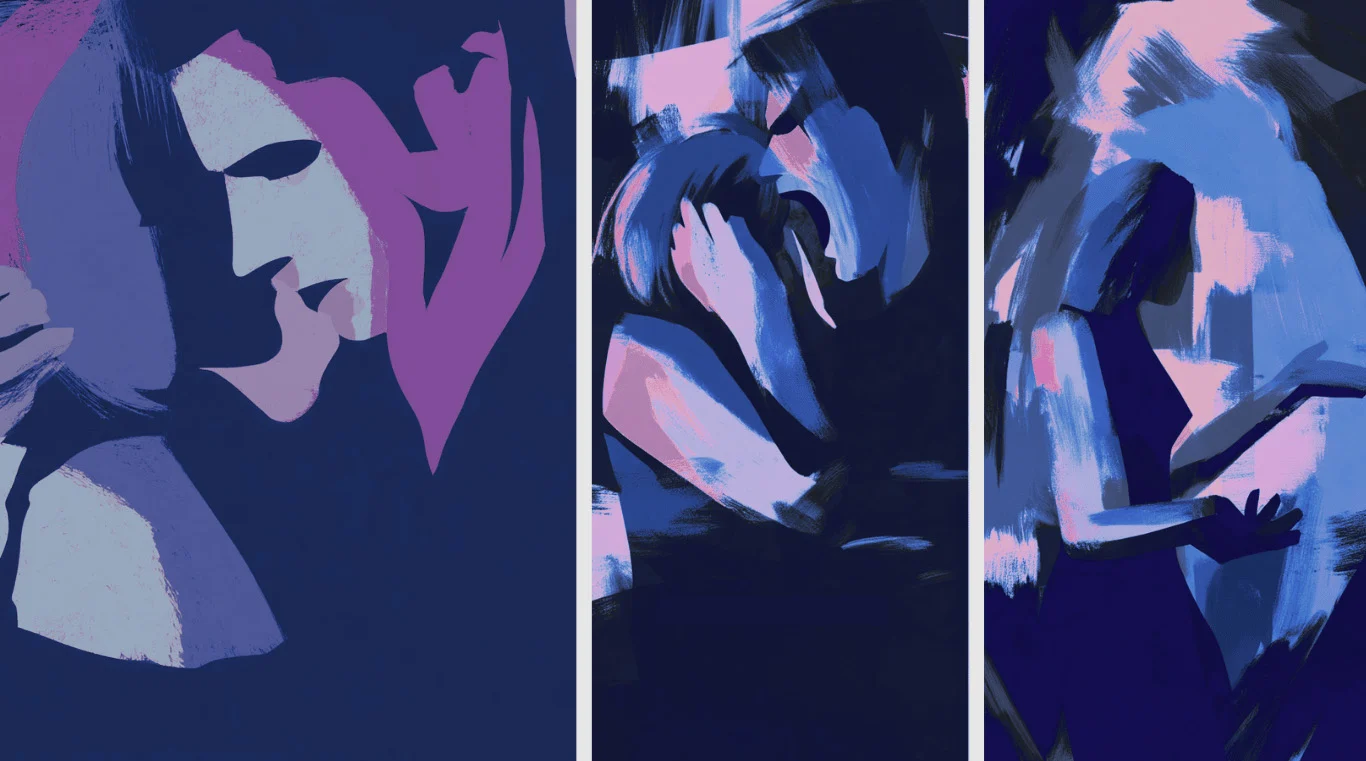
Janice is 57. She has been married for 30 years and has two adult children. When her children were young, she stopped working to stay home and raise them. Ten years ago, she went back to work as a receptionist in a medical office.
If you had asked Janice whether she was in an abusive marriage, she would have said no.
Her husband had never hit her. Was he moody? Yes. Could he be mean? Definitely. But after 30 years of marriage, Janice had gotten used to explaining away a lot of things.
She knew that his temper had gotten worse over the years. She knew that he had become increasingly controlling about money. She knew that seemingly small things could set him off, and that she had become pretty good at anticipating his moods and adjusting herself accordingly. She also knew that their children could not wait to get out of the house.
But abusive? That word felt too big. Too dramatic. It seemed like a word meant for somebody else.
Sometimes the warning signs are easy to recognize.
Often, they are much quieter.
Janice had actually believed that going back to work might help their marriage. Money had always been a source of tension, and an additional income would ease some of that stress. Maybe, she thought, earning her own paycheck would also give her a little more say in how they managed their finances.
Instead, the opposite happened. The more independent Janice became, the more controlling her husband seemed to become. He accused her of having an affair with her boss. He insisted she was hiding money. At times, he became convinced that she was plotting against him.
Then one day, he showed up at her workplace and caused a scene.
Afterward, a nurse Janice worked with pulled her aside. She told Janice that she was worried about her and suggested that she call a domestic violence hotline.
Janice was stunned. Domestic violence? Abusive Relationship?
She thought about the phrase and immediately dismissed it. He had never hit her. Never!
And this is where Janice’s story is not unusual.
At Jewish Family Service LA’s JFS Hope Counseling Centers, we often meet people who know that something in their relationship does not feel right long before they have a name for what they are experiencing. They may tell us that their partner is controlling, jealous, unpredictable, intimidating, or cruel. They may describe walking on eggshells or changing their own behavior to prevent an argument. But they may hesitate to use the word abuse.
Domestic violence is not defined by whether someone has been hit. It is a pattern of behaviors used by one person to gain or maintain power and control over an intimate partner. That pattern can include physical violence, but it can also include emotional and verbal abuse, financial control, sexual abuse, intimidation, threats, stalking, isolation, and other forms of coercive control.
And it can happen to anyone. There is no particular age, race, religion, culture, gender, education level, or socioeconomic status that protects someone from domestic violence. Nor is there one picture of what an abusive relationship looks like.
Sometimes the warning signs are easy to recognize. Often, they are much quieter.
Maybe your partner needs to know where you are at all times. Maybe you have stopped seeing certain friends because it is easier than dealing with the argument afterward. Maybe you have to account for every dollar you spend. Maybe accusations of cheating are becoming more frequent. Maybe your partner interferes with your work, checks your phone, humiliates you, or makes you question your own judgment.
Or maybe you simply notice that you are organizing more and more of your life around one question: How will my partner react?
That question can tell us a lot.
Domestic Violence Awareness Month is an opportunity to expand our understanding of what abuse looks like. Because sometimes recognizing domestic violence does not begin with asking, “Has your partner ever hit you?”
Sometimes it begins with asking, “Do you feel free to be yourself in your own relationship?”
If you or someone you know needs help, please call JFS Hope’s crisis lines at 818-505-0900 or 323-681-2626. For more information, please visit jfsla.org/hope.

