
The Joy of Caring
Doreen Klee’s lasting gifts to JFSLA
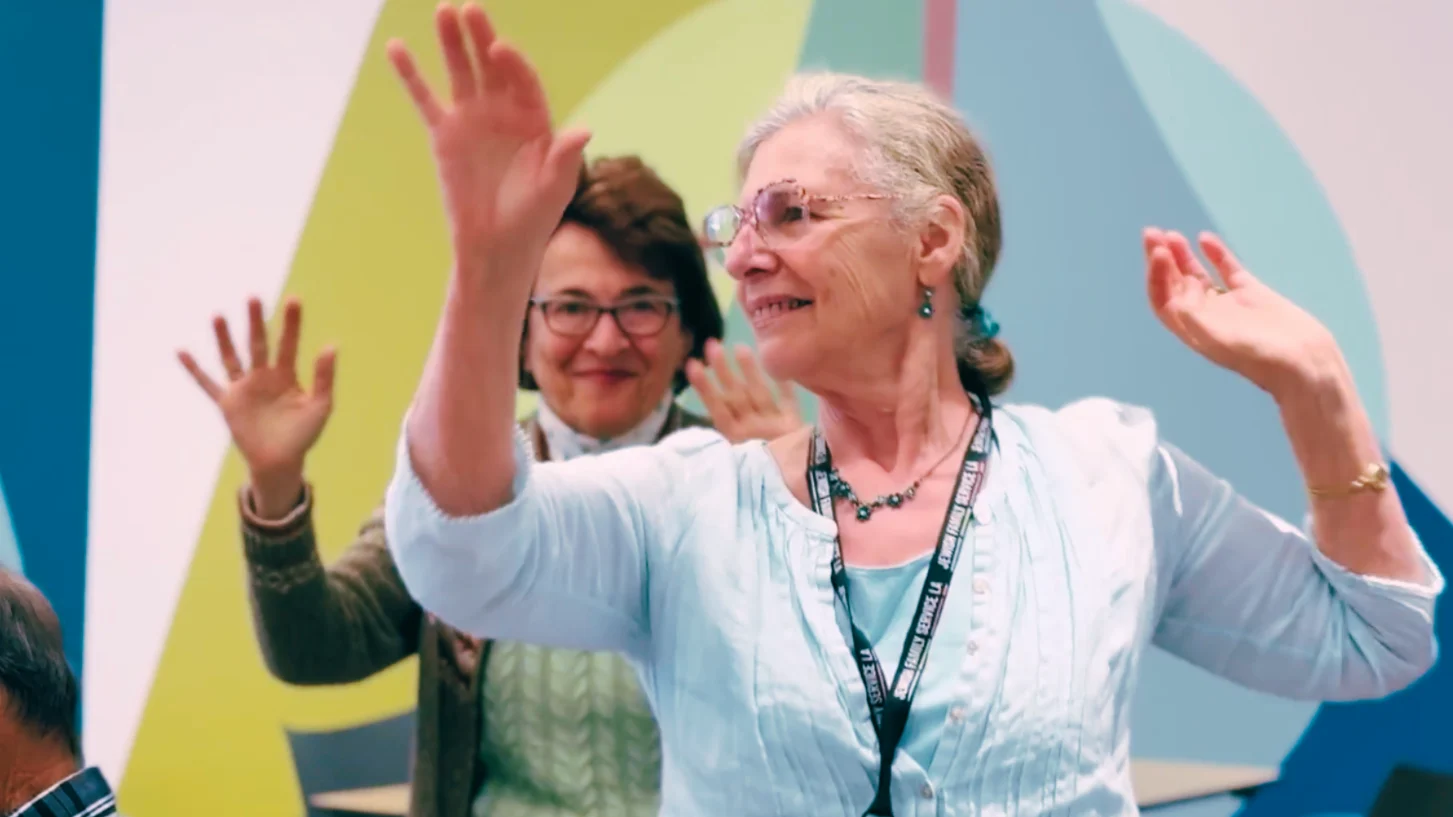
Some people are organized by authority. Others by efficiency. Doreen Klee is organized by hope.
It shows up in the way she listens, and the way she looks for what is possible in people. Over the years, that spirit made her not only a beloved social worker, community center director, volunteer, and board member at JFSLA, but also the kind of person who helped those around her feel steadier, safer, and more fully seen.
When Doreen began her first-year social work placement in 1991, she thought she would be working with children. “I was always good with kids,” she said. Instead, she was placed at what was then Jewish Family Service LA’s Freda Mohr Senior Center (which today is the site of JFSLA’s Gunther-Hirsh Family Center). Within days, she knew she was where she was meant to be.
“I realized in the first week of working there that it was really my place,” she said. “Older adults were my people.” That recognition came from somewhere deep.
Growing up in West Los Angeles, Doreen found warmth and refuge with her grandparents, Eastern European immigrants whose home was full of Yiddish, comfort, and welcome. If life at home became difficult, she would run around the corner to them. Long before she had the language for it, she was learning what safety felt like: a place where people were received as they were.
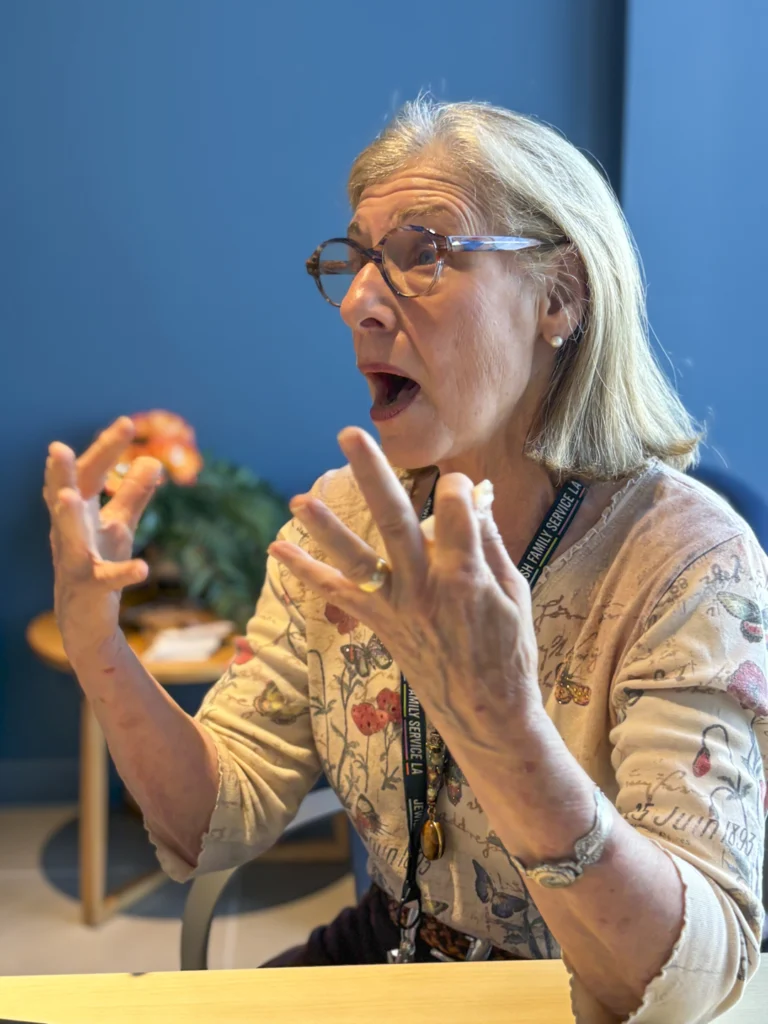
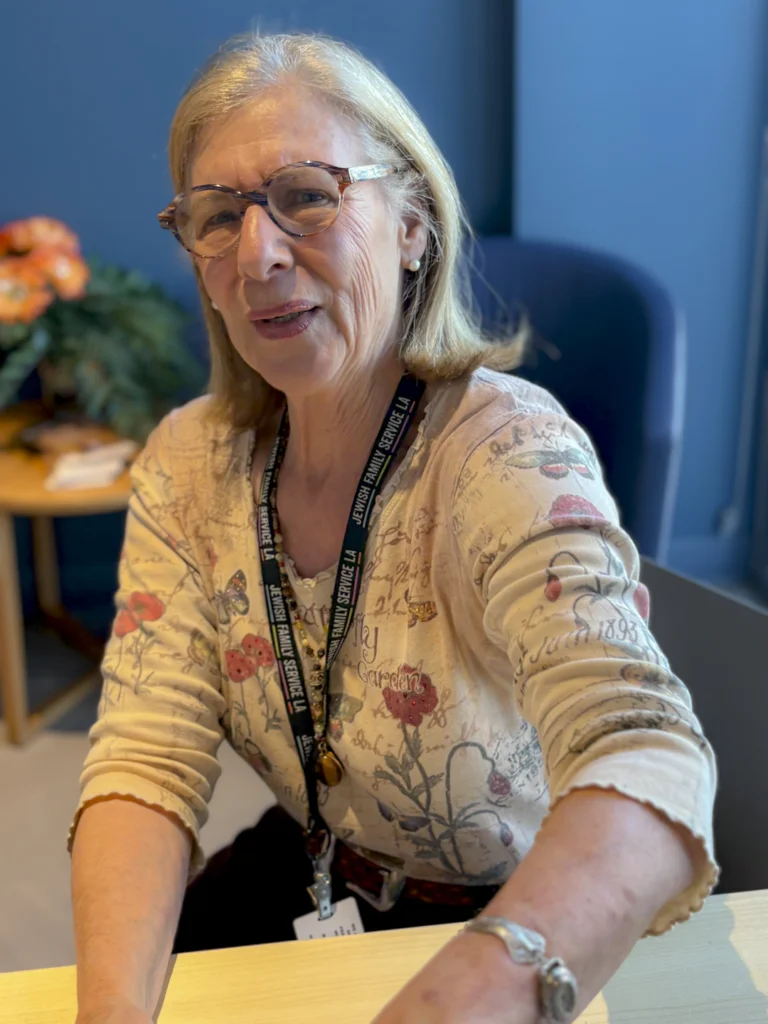
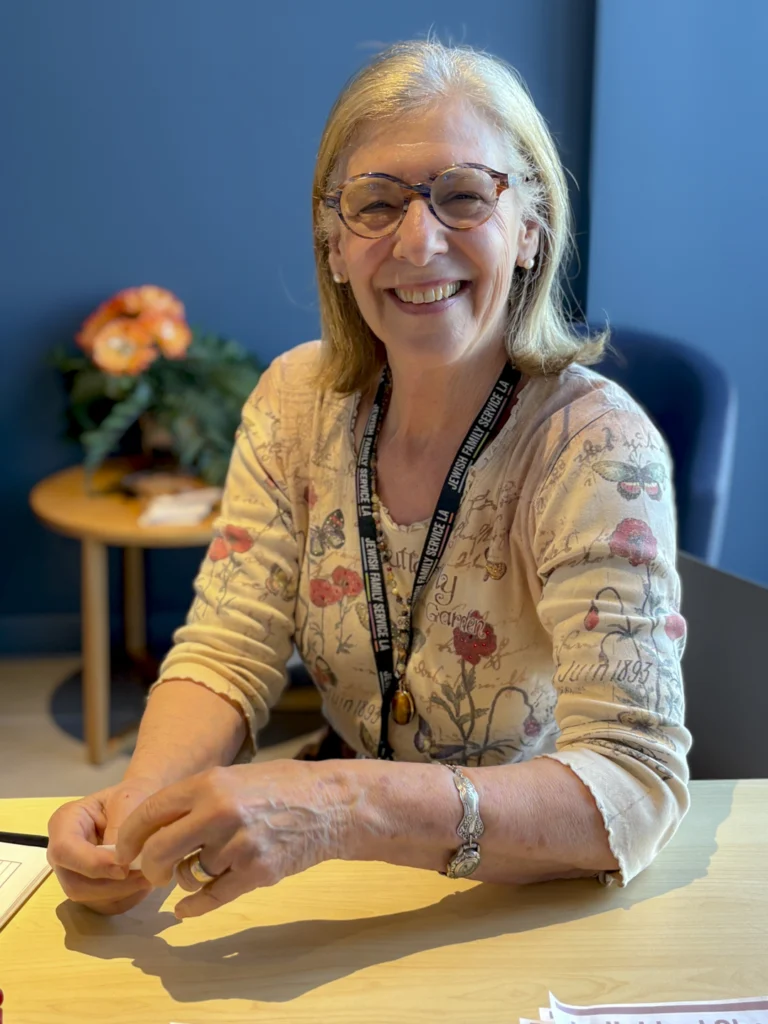
That understanding shaped not only the kind of social worker she became, but the kind of colleague, leader, and volunteer she would remain for decades.
Doreen came to social work later than some. After raising her children, she found herself at 40, wondering what would come next. An aptitude test through a UCLA extension program pointed her, with uncanny specificity, toward social work in a nonprofit setting. She had never met a social worker. She did not really know what the work was. Still, she listened to the nudge and began.
At JFSLA, she grew into a remarkable range of roles: social worker, Alzheimer’s specialist, trainer, director, volunteer leader, board member, and longtime volunteer. She helped strengthen student training across the agency and played a key role in the geriatric social work education consortium, GSWEC, which encouraged more students to enter work with older adults at a time when few chose that path. Later, as Director of Volunteers, she helped unify volunteer practices across the organization and made visible the extraordinary value volunteers contributed. But titles alone do not explain Doreen’s impact.
Doreen does not divide the world into experts and everyone else. She listens for what others carry. She makes room. She learned from professionals, but also from volunteers, peers, and participants. “I learned as much being the volunteer for the Shabbat parties as I learned when I was directing other people,” she said. Shabbat is celebrated each Friday afternoon at many of JFSLA’s senior centers open to all seniors to enjoy live music, dancing and refreshments.
“Doreen has the ability to make each person she interacts with feel special. I will miss her wonderful greetings every time she walked into the room. She has a presence that lights up the room.”
— Phyllis Miller
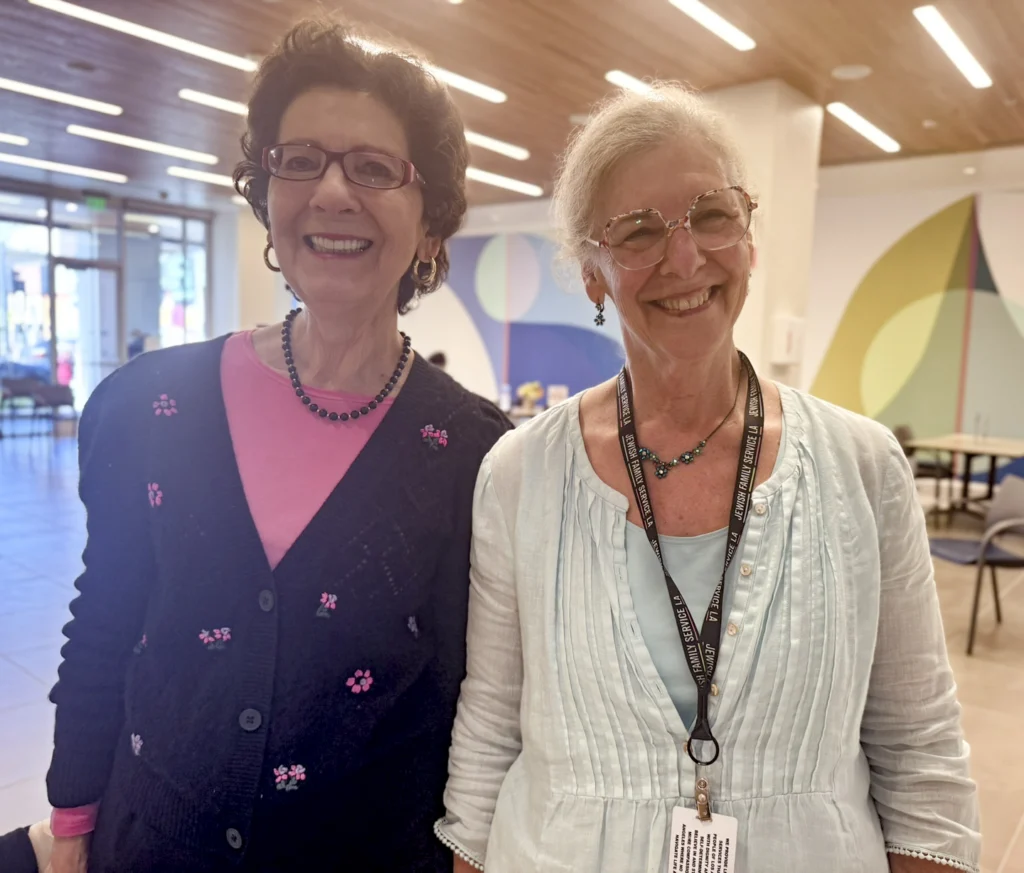
Phyllis Miller, her fellow volunteer at the Friday Shabbat Party, remembers meeting Doreen and immediately sensing they would be a good team. “My first impression of her was that she was a sincere, open, congenial person—and we were going to be a great team,” she said. What stayed with her most was Doreen’s warmth. “Doreen has the ability to make each person she interacts with feel special,” Phyllis said. “I will miss her wonderful greetings every time she walked into the room. She has a presence that lights up the room.”
“I think the work taught me that you never know enough,” Doreen said. “You should never make assumptions because you never really walk in somebody else’s footsteps.”
That humility became one of her great strengths. In an organization dedicated to care, she helped create the conditions that make care possible: openness, curiosity, mutual respect, and the willingness to stay vulnerable enough to keep learning.
“Doreen was able to make anybody, and everybody feel seen.”
— Susie Forer-Dehrey
Former Executive Vice President, JFSLA
For Doreen, that vulnerability was never weakness. It was how trust was built. It was how people learned. It was how a workplace became a community.
Susie Forer-Dehrey, the former Executive Vice President of JFSLA who worked closely with Doreen for more than two decades, saw that same spirit throughout her professional life. “Doreen was able to make anybody, and everybody feel seen,” Susie said.
Even when she pushed back, she did it with grace. “It was usually through questions,” Susie said. “She leads with her heart.” That combination—curiosity, courage, and compassion—made her not only a trusted colleague, but a voice people listened for whenever she was in the room.
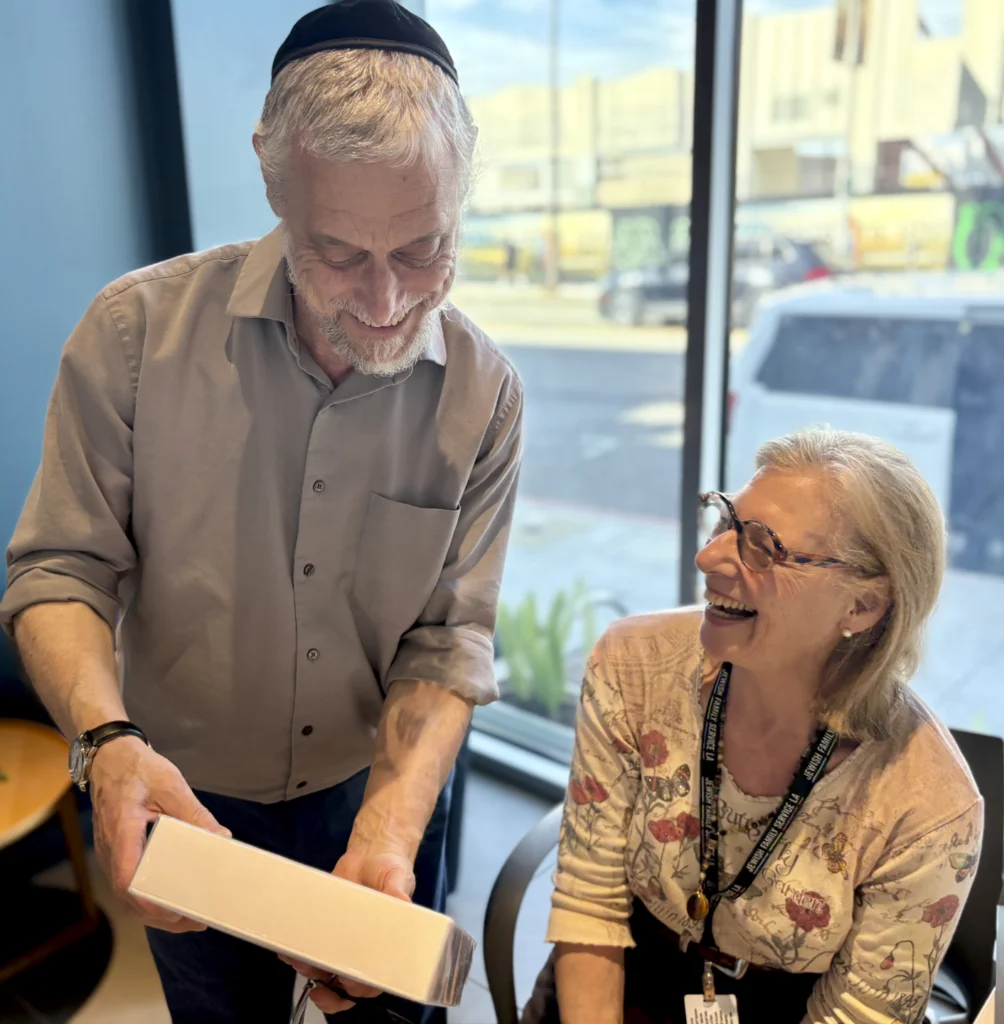
After retiring from staff leadership in 2011, Doreen found she missed the daily life of JFSLA too much to fully step away. She joined the board in 2012 and continued volunteering, including helping nurture the Shabbat gatherings at the Gunther-Hirsh Family Center into a beloved and growing tradition. “I never really stopped being a part of JFSLA,” she said.
Now, in Washington state, closer to her children and grandchildren, Doreen is beginning a new chapter. She speaks warmly of walking trails, water aerobics, neighborhood gatherings, and the possibility of volunteering again. That feels exactly right. Someone organized by hope does not simply stop engaging with the world. She keeps meeting it.
Doreen’s legacy lives in the culture she helped strengthen: a culture where listening matters, where volunteers are valued, where people are treated as more than their hardest moment, and where curiosity is not a sideline to service but part of its foundation.

