
Services for older adults in LA at risk as state leaders consider funding shift

The Brief
by Makenna Cramer for LAist
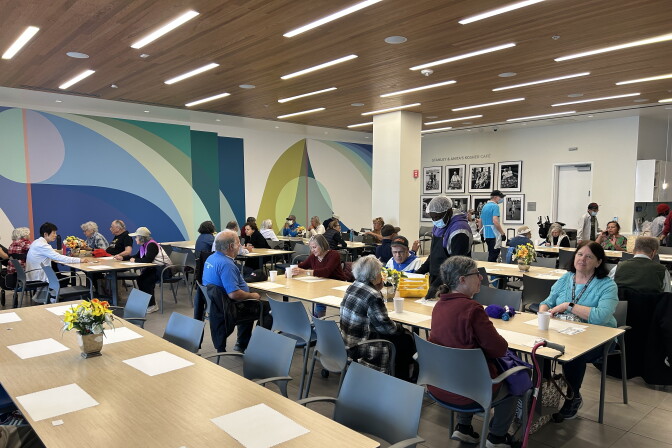
The Jewish Family Service L.A. senior center in the Fairfax Village neighborhood provides hot lunches and activities for older adults. Group lunches, home-delivered meals and caregiver support programs are among the services that L.A.-area older adult organizations are warning could be cut under a proposed funding shift. Nearly two dozen organizations, which make up the Los Angeles Coalition for Aging, say L.A. is facing “substantial” funding losses while resources are redistributed to smaller, more rural regions.More than 2 million older adults — generally people aged 60 and older — live in L.A. County, a vast majority of whom are aged 65 and older, according to the state Department of Aging.
According to the coalition, the population exceeds any other county in California, with L.A. older adults increasingly experiencing homelessness and struggling to meet their basic needs.The proposed funding shift could lead to more than 400,000 fewer meals each year to the county’s older adults who rely on the programs — not including numbers from the city of L.A. That’s equivalent to roughly 1,500 fewer meals every day.Catherine Schneider, with Jewish Family Service L.A., which is part of the coalition, told LAist the funding shift moves money away from the oldest, most vulnerable adults in major urban areas.“Many of [our seniors] have to choose between, do I pay my rent? Do I pay my medical bills? Or do I pay for food? That’s the current reality, that’s our starting place,” Schneider said. “So when we make cuts to the meals that they are receiving, then you’re going to see a further spike in homelessness.”
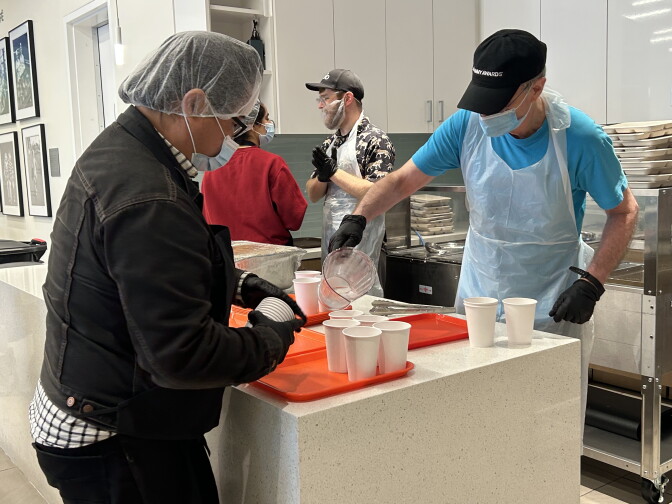
The lunch for the day was delivered on trays along with cups of water to each older adult.(Makenna Cramer/ LAist)In the city of L.A., the number of people aged 65 and older experiencing homelessness jumped more than 17% in a year, and more than 36% in two years, according to annual point-in-time counts.How would it work?The proposal would update the intrastate funding formula, which supports local services and targets areas with the greatest needs, according to officials.It’s been about 30 years since the formula was updated, all while the state’s older adult population has dramatically changed.“
So it was high time that we did this review and we ensure that the dollars are reaching the communities that need them most,” Nicole Shimosaka, chief deputy director with the state Department of Aging, said during a webinar Wednesday.The proposed funding formula would collectively cut more than $6 million from L.A. city and county. That’s a 24% drop — 12% for the county and 12% for the city.Several counties with more rural populations, on the other hand, would see an increase:
- Nevada County would be an 87% increase, or about $820,000 more Amador County would see a 71% jump, or about $400,000 morePlumas County would get 43% more, or about $200,000Mariposa County would see a 41% increase, or $166,000 more
Mariana Jimenez, who lives in West Hollywood and comes to the center every day to eat, snacked on slices of cantaloupe while staff passed out lunch trays.“I want to come in for many years more,” she told LAist. “This is very healthy for me to come every day.”
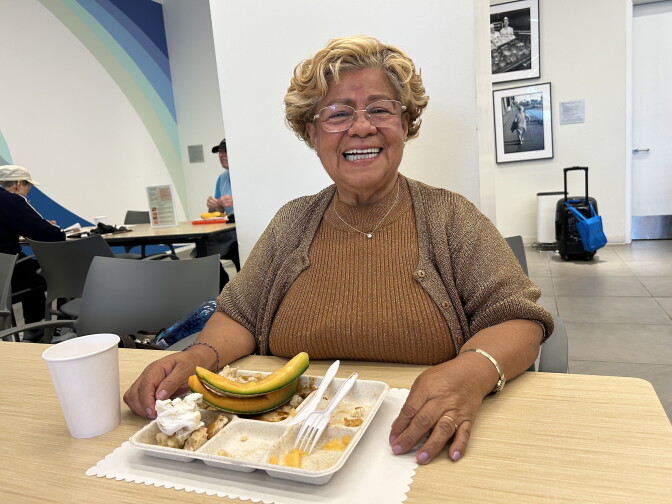
Mariana Jimenez has been coming to the center every day for years. She said she enjoys the hot lunches and dancing activities on Fridays.(Makenna Cramer/ LAist)Frank McRae, 82, takes two buses to get to the senior center almost every weekday for meals.
McRae doesn’t have a stove or complete kitchen at home, which he said makes the “excellent quality” and “consistent” lunches more important.Without the group meal program, McRae said the “galloping cost of food … would really be a hardship.” He knows by heart how much the cost of meat, cheese, soups and other staples have risen recently at almost every grocery store in the area.“This center is keeping people alive, it’s keeping people thriving,” he said. “It’s giving people hope, it’s giving them outlets.”

Frank McRae, 82, used to take three to four buses to get to the center several times a week. He enjoys the meals, gym access and doing research in the computer room. How could it affect L.A.?The Los Angeles Coalition for Aging, which includes organizations like the Los Angeles LGBT Center and Meals on Wheels West, collectively serves thousands of older adults and caregivers in the county’s diverse communities. The Little Tokyo Service Center, another member of the coalition, assists more than 5,000 people so older adults can live independently as long as possible.
Peter Gee, co-executive director, said there isn’t enough funding for older adult services to begin with, and the proposed shift would be cutting millions from an already limited pool.“At the end of the day, it would be more older adults and their caregivers that would be going hungry,” he said. “A lot more people that would be facing isolation, a lot more people that would be experiencing homelessness and housing insecurity.”
Among the unhoused, older adults are estimated to be the fastest-growing population in California.
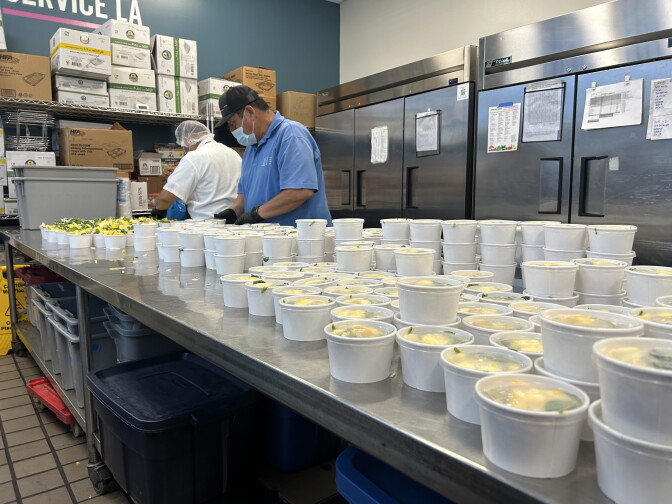
The Fairfax Village center has its own fully stocked kitchen, which has been led by the same chef for the last 34 years. Workers are preparing a mango salad for the next day’s meal service.
)
Jewish Family Service L.A.’s kitchen has served meals for decades, including when power went out after the 1994 Northridge earthquake and through the COVID pandemic.
Jewish Family Service L.A. serves about a quarter million meals annually to more than 3,000 people, according to Schneider. If the proposed funding shift moves forward, the meals, transportation, in-home care, senior centers and activities that Schneider said is “very much a lifeline for folks” would face significant cuts.“
There’d be some very painful decisions that we might have to make, and it would impact the lives of our neighbors,” she said.What are advocates and older adults asking for?Gee said the proposal was a surprise to the coalition. It’s urging the California Department of Aging to pause implementation until there’s been “meaningful engagement” with providers, advocates and affected communities.In a nutshell, Gee and Schneider said they’re asking state leaders to slow down and consider the consequences.He encouraged older adults to contact state leaders, including Newsom’s office, to speak up about the “simply unacceptable” proposed funding shift.

