
Keeping Seniors Safe, One Call at a Time
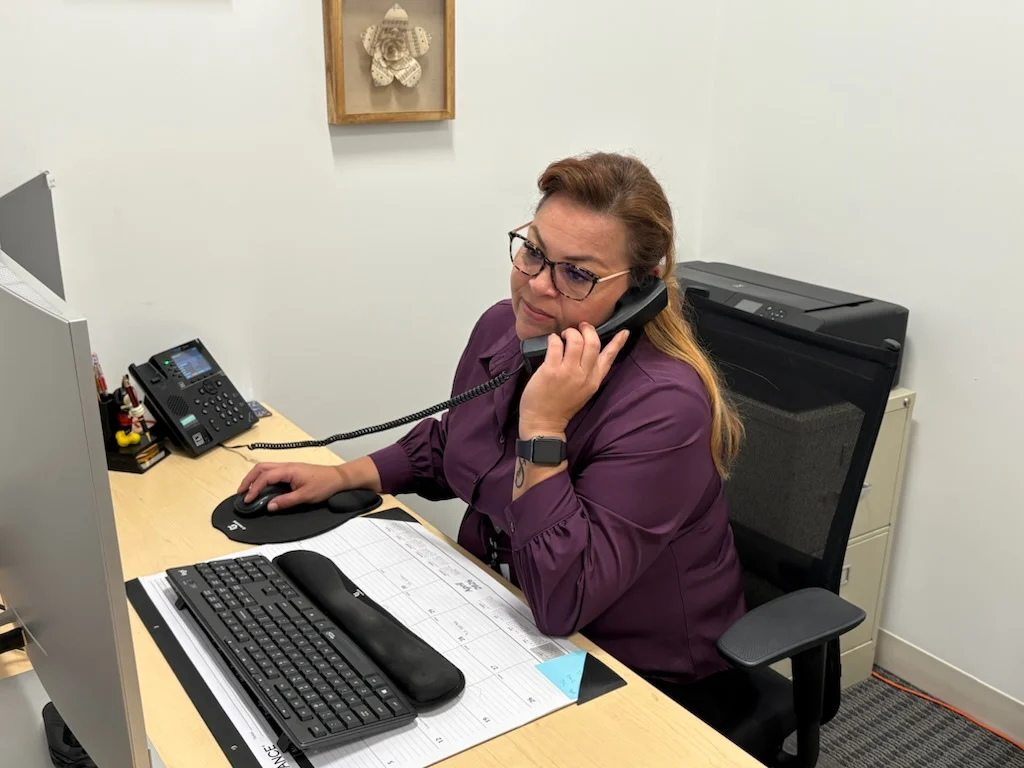

Yaya Contreras, JFSLA office coordinator, connects with seniors through JFSLA’s Telecheck Program.
Every weekday morning, Jewish Family Service LA volunteers call homebound and isolated seniors across Los Angeles and West Hollywood through JFSLA’s TeleCheck program. The program, funded in partnership with the City of West Hollywood and the City of Los Angeles Department of Aging, has become a vital lifeline for vulnerable seniors.
On the surface, these calls may seem simple—brief check-ins, conversations about books or movies, a familiar voice saying hello. But for the seniors on the receiving end, they represent something far more significant: safety monitoring, connection, and the reassurance that someone is paying attention.
Network of Care
The program ensures that seniors are accounted for every weekday. If a client does not respond, a structured protocol begins: follow-up calls, outreach to emergency contacts, coordination with social workers, and, if necessary, a welfare check. The importance of these procedures is most evident when timely intervention is needed.

In one case, a client had fallen in her apartment on Friday evening and remained on the floor throughout the weekend. She was only discovered on Monday after a TeleCheck follow-up triggered a welfare check. Without the program, the outcome could have been far worse.
In another instance, a client was not responding because her phone line had stopped working. The volunteer flagged the issue, the coordinator alerted support staff, and the client was able to restore phone service and receive additional assistance.
These moments highlight what makes TeleCheck effective: it not only responds to emergencies, it helps prevent them from escalating. Behind the program are coordinators who transform a daily call system into a reliable, responsive network of care.
The JFSLA Coordinators Behind the Calls
At the center of this effort are two coordinators: Olga Bronstein, JFSLA social worker overseeing the West Hollywood TeleCheck program, and Yaya Contreras, JFSLA office coordinator overseeing the Jona Goldrich Multipurpose Center’s TeleCheck program. Together, they manage volunteer training, assign daily calls, monitor responses, track missed check-ins, and initiate emergency protocols when concerns arise.
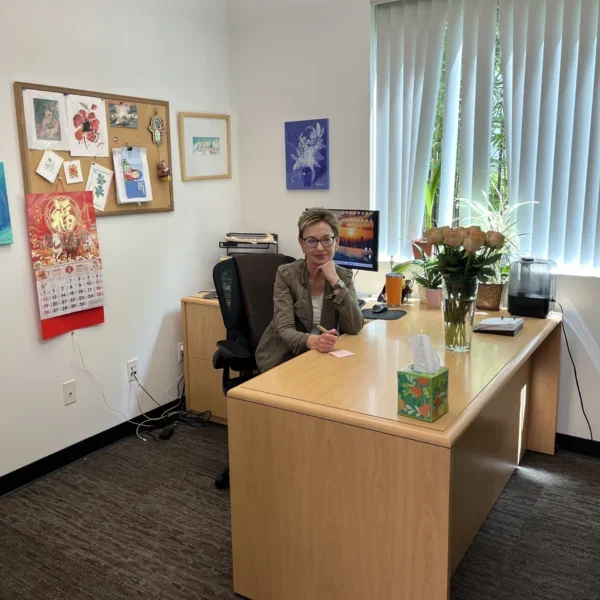
“It’s essential that we reach every client each day—or at least confirm they’re safe through emergency contacts or, if necessary, the Sheriff’s Department,” said Olga. “It really is a full-day effort. In the morning, I connect with the volunteers, and then we begin tracking down any clients we haven’t reached. Our support staff follows up until about 1:00 p.m., and if a client still isn’t responding, the case manager or intake social worker steps in. Throughout it all, I’m monitoring the process to make sure every client is accounted for.”
Currently, Olga manages 10 TeleCheck senior clients in West Hollywood, working with 5 volunteers. Her responsibilities, however, extend far beyond the program. As a social worker, she oversees a caseload of 30 clients, many of them Holocaust survivors. She conducts intakes, manages a disability program for West Hollywood residents ages 18 to 55, and trains new social workers. Even within this broader scope, she continues to oversee TeleCheck, recognizing it as a vital source of connection for many seniors.
“Many of our clients enroll in TeleCheck because they are very lonely, isolated, have no family, and they are afraid that they can fall in their apartment and no one will find them,” said Olga. “This program helps ensure that doesn’t happen.”
At the Jona Goldrich Multipurpose Center, Yaya brings the same level of care, focusing on building meaningful connections between volunteers and clients while understanding the sense of security the program provides.
“There are clients whose families live out of state or are simply busy,” Yaya explained. “They may not get as many calls as they’d like. This helps ease that sense of loneliness.”
Currently, Yaya manages 15 senior clients, working with 3 volunteers. In addition, she oversees many of the program’s day-to-day operations. She coordinates intakes and assigns new clients to social workers, maintains the client database, and runs reports. She also manages the Department of Aging budget, tracking funds, processing check requests and invoices, and making purchases for both programs and clients, along with a wide range of administrative responsibilities that keep services running smoothly.
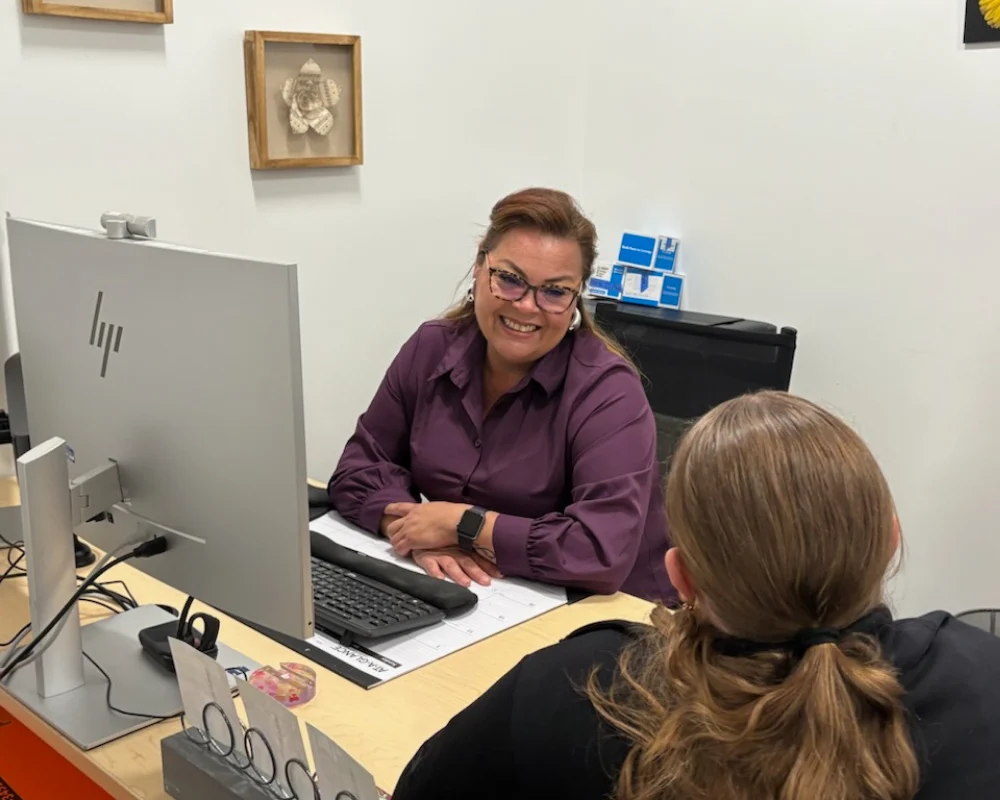
What makes the program unique, according to both Yaya and Olga, is the genuine relationships that form between volunteers and clients over the phone. Over time, clients begin to recognize familiar voices, look forward to conversations, and rely on the consistency of daily contact. Coordinators are intentional about each match, pairing volunteers and clients based on language, personality, and communication style.
“We have a really strong group of volunteers, and many have been with the program for a long time. When I thank them, they often say they get just as much out of the conversations because they feel the clients’ appreciation,” said Olga.
“They build real relationships—it’s not just a quick, friendly check-in. It really brings people together,” said Yaya. “Clients know that if they have a concern or need something, they can share it with the volunteer, and the volunteer will make sure to let us know so we can follow up and help in any way we can.”
Both coordinators also serve as key points of escalation when concerns arise. Whether emotional, medical, or logistical, they work closely with social workers and support staff to ensure issues are addressed quickly and with care.
Together, Olga and Yaya form the backbone of TeleCheck. While much of their work happens behind the scenes, it is essential to the program’s success. Volunteers may be the voices clients hear each day, but those conversations are supported by the structure, training, and oversight the coordinators provide.
Ultimately, TeleCheck is more than a check-in system—it is a responsive network of care that helps ensure seniors are seen, heard, and safe every day.
If you are interested in volunteering, please visit jfsla.org/volunteer or email us at volunteer@jfsla.org.