
Homelessness Among Domestic Violence Survivors Jumps 43% as Shelters Face Funding Freeze
by Rachael Gaudiosi
Westside Currents published 08/04/26
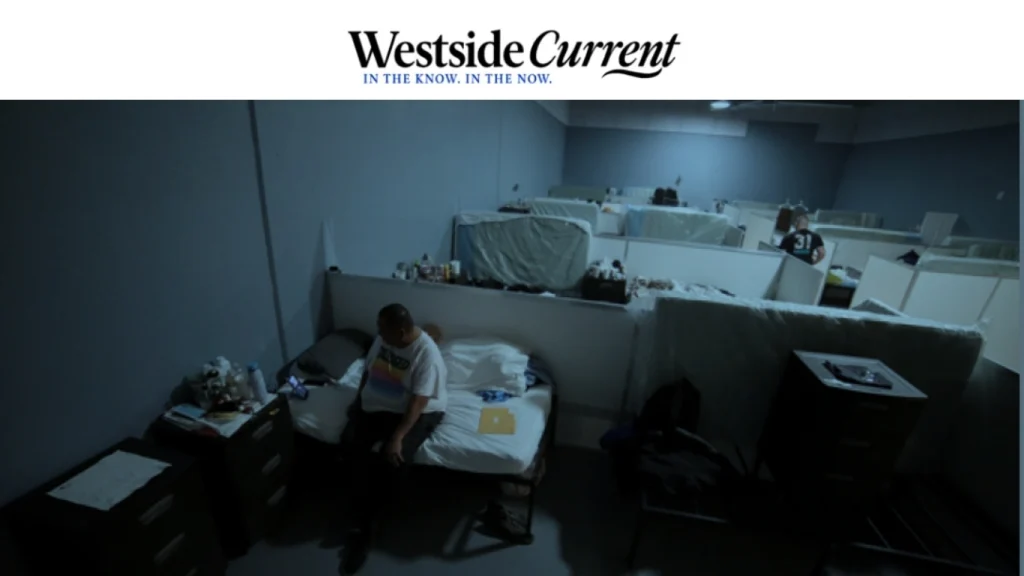
LOS ANGELES — When Sarah Smith decided to leave the man who had verbally and physically abused her for nearly a decade, she knew finding safety wouldn’t be easy. What she didn’t expect was that one of the biggest obstacles to rebuilding her life wouldn’t be her abuser — it would be a federal funding battle centered on alleged fraud inside Los Angeles’ homelessness system.
With her two children beside her, Smith spent nearly twomonths bouncing between hotels while searching forsomewhere safe to go. She called roughly 20 shelters andservice providers, only to hear the same answer over and overagain: there were no beds available, and in many cases, noteven room on the waiting list.”There’s not a lot of resources out here for people who areexperiencing domestic violence situations,” Smith said. “Therewere so many doors shut in my and my children’s faces whenwe were trying to get shelter. It was devastating. I had no ideawhat to do.”
Her experience reflects a growing crisis across Los Angeles. Nearly 5,700 people experiencing homelessness reported that domestic or intimate partner violence contributed to their homelessness during the 2026 Greater Los Angeles Homeless Count, according to the Los Angeles Homeless Services Authority. That’s a 43% increase from last year and more than double the number reported in 2020.
Just as more survivors are seeking help, however, many of the organizations serving them have spent months operating without expected federal funding — not because of anything they did, but because they became caught in a legal battle over alleged fraud and financial mismanagement at the Los Angeles Homeless Services Authority.
Among them is Jewish Family Service LA’s Hope Transitional Shelter, a confidential program that houses women and children fleeing domestic violence while helping them rebuild theirlives.
“We’ve seen a staggering 43% increase over the last year in the number of people experiencing homelessness in Los Angeles as a direct result of fleeing domestic or intimate partner violence. Nearly 5,700 Angelenos fleeing domestic violence are home lesson our streets, while our shelters have been operating without any LAHSA funding for over three months,” said Eli Veitzer, EO of Jewish Family Service LA. “This situation is appalling and cannot continue. While HUD and LAHSA wage their court battle, we call on all parties involved to remember the people affected by this funding freeze, among them the 12 women and 25 children living in our JFS Hope transitional shelter, receiving vital services to help them stay safe while they getback on their feet.” The shelter currently houses 12 women and 25 children.
Its previous federal grant expired March 31. A replacement contract, expected to begin April 1, was never executed, leaving the nonprofit to continue operating without reimbursement. Veitzer said the organization is now facing a funding shortfall exceeding $300,000.”
The system is under really enormous stress right now, and that stress has landed on the providers and on the clients they serve,” Veitzer told the Westside Current. “We are trying toraise as much money as possible on our own, but in the long term there’s no way to support the full services needed without federal funding.
“The funding crisis stems from HUD’s decision in June to suspend LAHSA from administering federal homelessness grants after the agency’s Office of Inspector General launched an investigation into alleged fraud, false statements, conflicts of interest and financial mismanagement.
HUD alleges LAHSA failed to adequately document millions of dollars in federally funded homelessness programs, including otel rooms paid for but allegedly left vacant and thousands of housing placements the agency could not fully verify. LAHSA has disputed many of the allegations, saying it has corrected oris addressing the issues identified by HUD, and has sued the federal agency to restore funding. While those allegations center on LAHSA’s management, providers say the fallout has landed on organizations with no connection to the conduct under investigation.
Domestic violence shelters have become one of the clearest examples. For Smith, the consequences were painfully real. She continued calling shelters until she was eventually offered a place at Hope Transitional Shelter. Inside, she found far more than temporary housing. Staff connected her with counseling, financial planning, parenting support and other services designed to help survivors rebuild independent lives after abuse.” I think it would have been impossible for me to successfully leave my situation if it wasn’t for transitional housing,” Smith said. “Not everyone has a family to help them out, and the Hope Shelter filled in the protection and support we needed.”
Smith and her children have since moved into a home of their own. She said they are now in a much healthier place emotionally because of the support they received while at the shelter. “It’s not possible to describe the difficulty of a woman fleeing potentially years of violence and abuse with her children to rebuild her self-esteem and her family’s life,” Veitzer said. “It’s one of the hardest mountains to climb, and the more obstacles we put in her way, the more likely she is to go back to that abuse.”
A federal court hearing over the funding dispute is scheduled for Aug. 6. Meanwhile, applications for the next round of HUD homelessness grants are due Aug. 26, leaving providers uncertain whether they will receive the funding needed to continue operating at current capacity. For organizations like Jewish Family Service LA, the legal fight is no longer just about contracts or court filings. It’s about whether the next woman who finds the courage to leave an abusive home will find an open door waiting for her.
Editor’s Note: Sarah Smith is a pseudonym used to protect the identity and safety of the survivor and her children.

