
Westside String of Murder-Suicides Highlights Barriers to Escaping Domestic Abuse
Written by Rachael Gaudiosi | Westside Current
Published Oct 29, 2026
LOS ANGELES — There has been a murder-suicide in Los Angeles every month of 2026 so far except for August—with more than half occurring in Westside communities. Also this year, homelessness among domestic violence survivors surged by 43% according to the Greater Los Angeles Homeless Count.
“I didn’t know what I was going to do, but I knew I’d had enough,” said Minah Jones, 49, who escaped a decade of abuse with her children two years ago. “A lot of women, unfortunately, don’t make it out alive.”
With nearly all murder suicide cases this year involving a couple in the age range of 45 to 55, advocates are raising awareness about how fear of becoming homeless can contribute to a sometimes fatal cycle of abuse.
“One of the things we’ve seen a lot over the last 10 to 15 years is fear of ending up on the street, without housing. If they’re financially dependent when they leave, where are they going to go?” Eli Veitzer, CEO of Jewish Family Services Los Angeles (JFSLA) told the Westside Current. “This fear of having nowhere to go leaves people with the option of staying in a situation they feel they might be able to manage better than being homeless.”
The number of people reporting domestic or intimate partner violence as contributing to their homelessness has more than doubled since 2020. At the same time, survivors like Jones are warning that many could be returning to or staying in abusive situations due to fear.
Veitzer spoke of one member of their domestic violence support group whose husband held a gun against her head and pulled the trigger. The gun jammed, and the woman survived. But Veitzer was not able to say with certainty that she did not return to her abuser—a common occurrence for many of the women actively in support groups.
THE CASES
According to various studies, prior domestic violence is the highest risk factor for becoming the victim of a murder-suicide.
In January, 52-year-old Hector Lionel Alfaro shot and killed his 48-year-old wife and 17-year-old daughter in Lakewood before also killing himself.
In February, Santa Monica police found a 54-year-old couple, victims of a suspected murder-suicide, inside their home after being called for a Welfare check.
In March, LAPD investigated the murder-suicide of a 55-year-old female and a 58-year-old male in Porter Ranch.
In April, Jeremy Ferguson, the director of operations for Downtown Santa Monica Inc., fatally shot his wife, Mandy Zelinka, 49, before killing himself at their Venice home.
In May, a 30-year-old North Hills woman shot and killed her 31-year-old husband, her 2-year-old son, and her 6-day-old daughter before taking her own life.
In June, 37-year-old Gabriel Chavez shot and killed his twin 10-year-old sons, Joseph and Greysen, in Canoga Park.
In July, Gul Erdogan, 45, was fatally shot in Westwood just days after her baby shower before her husband, Aytac Camdeviren, 43, died by suicide.
In September, a 47-year-old woman was shot and killed by her 48-year-old husband at their home on Pico Boulevard in Santa Monica.
On October 14, a 44-year-old man killed himself after killing his 53-year-old wife at their home on Fourth Street in Santa Monica.
THE REALITY
“The number of domestic violence beds available today is less than it was 10 years ago, and 10 years ago it was less than it was 20 years before,” said Veitzer. “Funding for services has not at all kept up with the cost of providing them. As a result shelters have closed, leaving fewer options.”
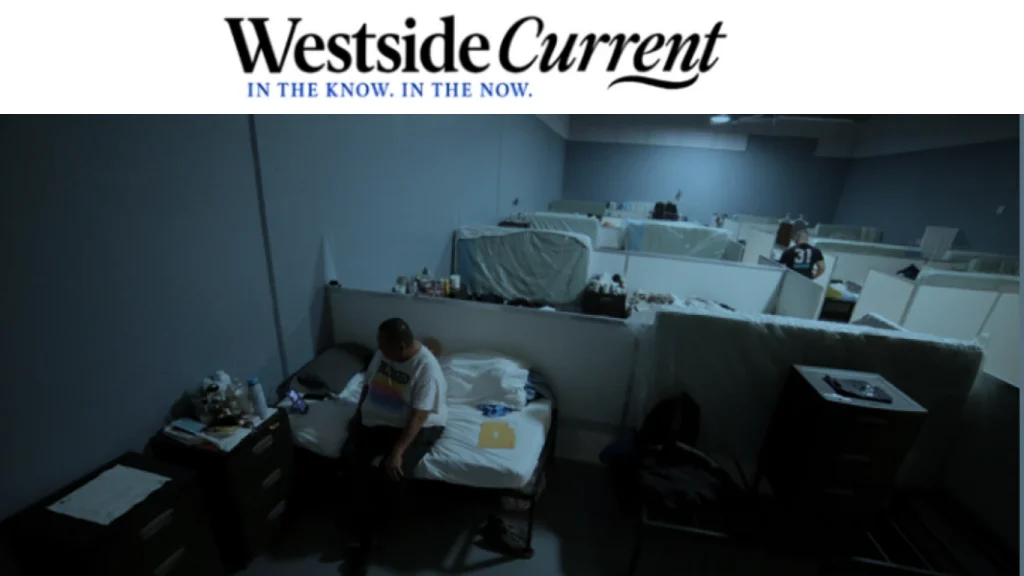
Veitzer stressed that one of the most vital pieces of escaping domestic abuse—transitional housing with wraparound services—is actually very difficult to secure. Veitzer explained that despite this being a vital step, there are very few housing beds compared to emergency shelter beds.
“Transitional housing is the stage where they can really begin to build an exit and a new life. Emergency shelter is crisis management, it’s literally just trying to get safe,” said Veitzer. “Many times, women can’t find transitional housing. That puts pressure on them, and they end up back because they’ve got nowhere to go.”
Before securing a spot in one of the limited transitional shelters across the county, Jones spent two months bouncing around hotel rooms, reaching out to family and resources trying to find a place to stay.
“I was reaching out to anyone I thought could help me find emergency shelter. They gave me some leads, but most of those shelters were full. Some even had a two-year waitlist,” said Jones. “After we finally got placed in emergency shelter, my case manager told me, ‘I’m going to be honest with you, a lot of people don’t get placed because there’s just not enough housing or resources out there.’”
Right before their shelter stay was about to end, Jones received a call that a room would be open in a transitional housing space the day after Thanksgiving. The family moved in and graduated out of the program successfully.
“In the last two years, I see so much growth in my kids. They’re happier, and doing better in school,” said Jones. “I had to take myself out of the equation, as crazy as it may sound, and focus on my children. I didn’t want them growing up in an environment thinking this abuse was okay. I knew the cycle had to stop with me.”
Jones said the resources offered, like counseling, therapy, and financial management, helped her learn the tools needed to finally break the cycle for children.
“Everything starts in the mind. If you tell yourself, ‘I can’t do it,’ then you’re not going to do it,” said Jones. “Love yourself enough to know you deserve to be loved properly. No woman or man deserves any sort of abusive relationship.”
RESOURCES
JSFLA 24-Hour Crisis Hotline: (818) 505-0900 or (323) 681-2626
County Hotline: (800) 978-3600
County Domestic Violence Shelters & Resources
