
Learning to Listen: Building the Next Generation of Therapists
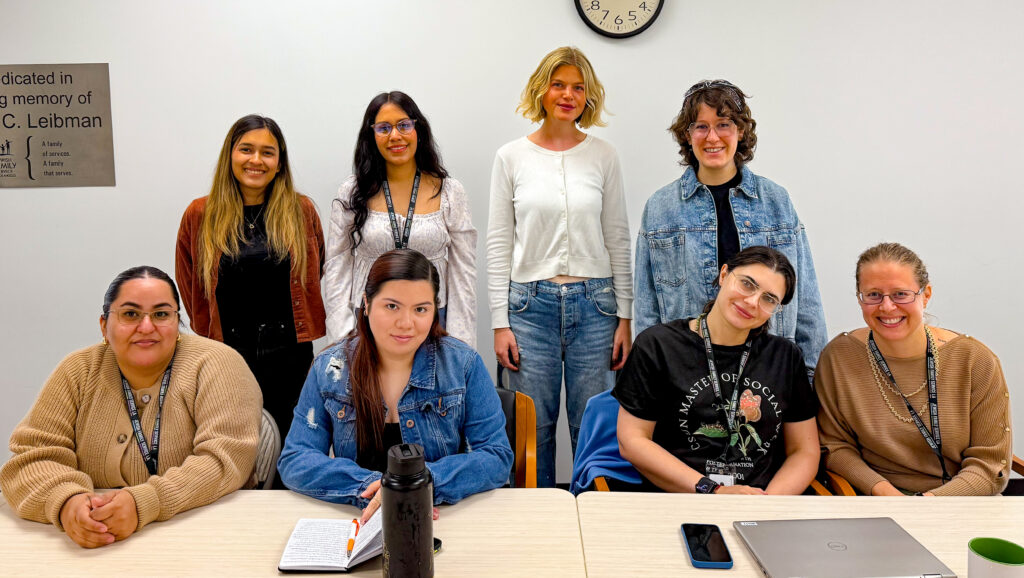
When Shelby Layne began her practicum at JFS Hope last spring, she was ready to transform years of social impact experience into clinical training. Married and a mother of two, Shelby has worked personally and professionally in advocacy and women’s rights but wanted to move closer into frontline support—to sit with clients, listen deeply, and be part of their healing process.
“I’ve always been really passionate about social impact,” she said. “When I was in high school, I was deeply involved with Jewish World Watch, and I’ve always been interested in social justice. After time in the private sector, I decided I really wanted to do direct service care.”
“Resilience often comes from an intersection of factors,” she said.
“It’s not only something within—it’s also the people
and systems in a person’s life.”
— Shelby Layne
Shelby enrolled in the University of Michigan’s online MSW program while living in Los Angeles and was accepted into JFSLA’s Internship Training Program to begin clinical training—one of the region’s most comprehensive pipelines for future social workers.
Shelby is one of nineteen social work interns serving across JFSLA programs that help support a continuum of care throughout Los Angeles: JFS Hope Domestic Violence Counseling and Shelters, Central Access, Senior and Multipurpose Centers, Mental Health Services, Special Needs, and Survivors of the Holocaust, and more.

Under close supervision from JFSLA clinicians, interns complete advanced coursework in trauma-informed practice, reinforced by weekly supervision and peer consultation.
Today, Shelby works directly with about ten clients each week and co-facilitates two support groups, including one in New Parents Connect—JFSLA’s program for pregnancy and postpartum support—gaining practical experience in counseling, motivational interviewing, and trauma-informed therapy.
“I was really impressed with the comprehensive nature of the 40-hour training,” Shelby said of JFS Hope’s training for domestic violence professionals. “It takes a 360-degree view—from the victim’s approach, from the perpetrator’s approach, understanding how children play a role.”
That certification forms the foundation of every JFS Hope intern’s training, focusing on client-centered engagement, psychoeducation about power and control, and recognition of non-physical forms of abuse. “When you get involved in this work, you see that it’s just so much broader,” she said. “You can be a survivor of domestic violence and have never been physically harmed.”
One lesson stayed with her. “When I saw that we’d be hearing from the SPCA, I wasn’t quite sure why,” she recalled. “Once I sat in, we explored when our life choices may be influenced by the needs of our pets. Not long after, I learned my client was in a similar dilemma. That training really opened my eyes to seeing people in a more complete way.”
“Resilience often comes from an intersection of factors,” she said. “It’s not only something within—it’s also the people and systems in a person’s life.”
For Shelby, self-care is now part of the profession. “Self-care isn’t an extra,” she said. “It’s part of the job. If you do not take care of yourself, you will not be able to perform at work.”
“I really believe it’s a privilege that I get to do this work and to hold space for some people’s hardest moments in their entire lives,” she added.
Interns like Shelby remind us that the future of social work depends on empathy made actionable—with people willing to listen, to learn, and to lead with care. Rooted in values of compassion, dignity, and service, JFSLA’s internship program helps transform those ideals into daily practice.

