
Fire Recovery Continues: One Year Later, One Family at a Time
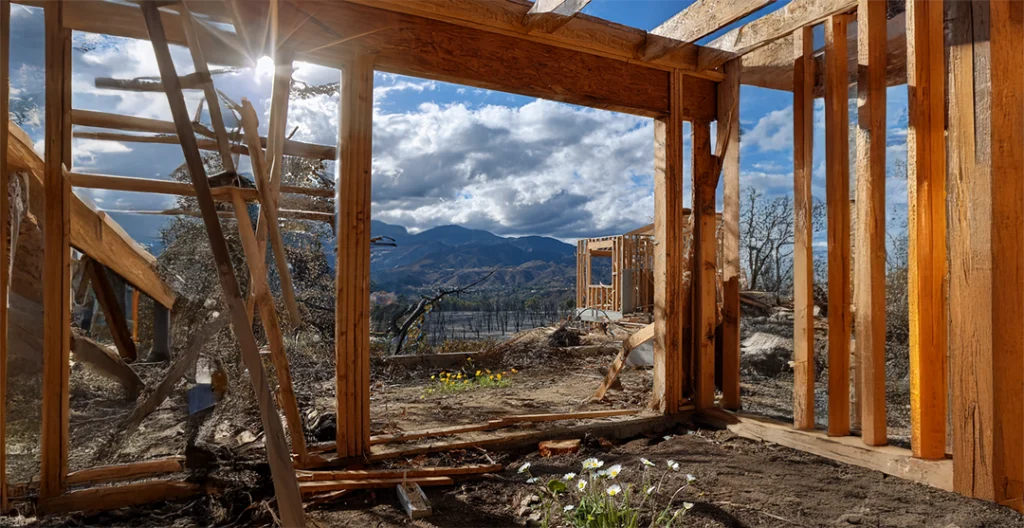
When the wildfires tore through Los Angeles County, the response was immediate. Emergency crews arrived. Disaster centers opened. Headlines filled the news cycle.
But recovery doesn’t follow the news cycle.
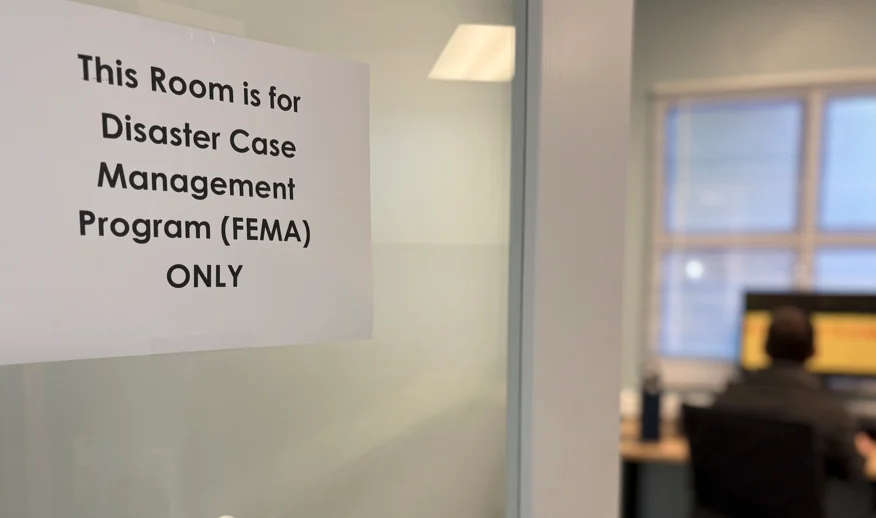
One year later, many survivors are still navigating insurance gaps, stalled rebuilding plans, temporary housing, and the emotional weight of displacement. The FEMA-funded Disaster Case Management Program (DCMP) is structured as a six-agency collaboration, with Catholic Charities serving as the lead agency coordinating reporting, training, and operational alignment.
From Emergency Response to Long-Term Recovery
JFSLA’s involvement in fire recovery began years ago during the Woolsey Fire, when a single grant-funded social worker showed up to support survivors with unmet needs. That early effort-built relationships and credibility.
When the most recent Palisades and Eaton fires struck, JFSLA was invited to take on a formal role as one of six agencies participating in countywide disaster case management, coordinated by Catholic Charities. The result is a structured, FEMA-funded program designed to help survivors navigate complex systems over time—not just in the immediate aftermath.
Karina Balaban, JFSLA’s Director of Homeless Prevention Programs, leads a team of seven case managers and social workers who are currently working with 177 survivors. In the early months, much of their work centered on FEMA appeals and documentation. Today, the focus has shifted.
“Now the core of the work is rebuilding,” Karina explains. “Navigating insurance, securing temporary housing, preventing contractor fraud, accessing food and government benefits, and connecting people to mental health support if they need it.”
Even with FEMA assistance, significant gaps remain. This year, the maximum FEMA payment for verified structural loss is $43,600—far below the actual cost of rebuilding. Families are left trying to close an impossible financial gap while making life-altering decisions: rebuild or relocate, stay near schools or move away, wait or sell.
The Power of Steady Case Management
Recovery is not only financial—it’s emotional and logistical.
JFSLA’s Co-Senior Director of Community Mental Health and Case Management, Jenn Glazer, LCSW, whose division integrates both case management and mental health services, emphasizes that not every survivor wants formal counseling. Many simply need a steady, knowledgeable person who will answer the phone, explain the next step, and help untangle complicated systems.
And that consistency matters. For parents trying to keep children stable while changing schools. For older adults overwhelmed by permit requirements. For families exhausted by hours spent on hold with insurance companies or FEMA representatives who have since rotated to other disaster zones.
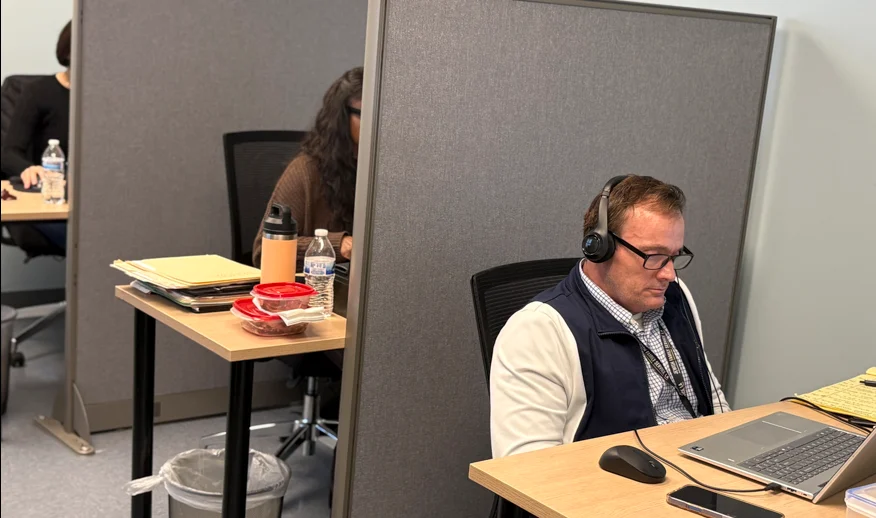
JFSLA’s model includes specialized roles to address real-world problems: A construction cost analyst helps survivors review contractor bids and assess rebuilding proposals; a data specialist ensures compliance and reporting accuracy; and a resource specialist to help connect people to additional resources. These behind-the-scenes systems allow case managers to focus on people.
Case management itself can be stabilizing—a reliable relationship in a year defined by uncertainty.
While case managers work directly with survivors, Aleksandar Pavlovic works behind the scenes. As the program’s Resource Specialist, his role is part research, part outreach, and part detective work. He maintains a living database of assistance—from county rent relief to donated goods to private discounts that require some sleuthing.
“Some resources are public. Many are not,” Pavlovic explains.
He has uncovered unadvertised furniture discounts for fire survivors by walking into stores and asking. He tracks tips shared in online survivor forums and verifies them before passing them to the team. He collaborates closely with resource coordinators at partner agencies to ensure families are not navigating alone.
“This job is personal. I’m helping survivors,
and I’m also helping my own community.”
–Aleksandar Pavlovic
His work is also personal. Aleksandar lost his own home in the Palisades fire and is rebuilding alongside his family. He understands firsthand the exhaustion of permits, contractors, and insurance claims.
“This job is personal,” he says. “I’m helping survivors, and I’m also helping my own community.”
Recovery Is Still Being Written
A year later, JFSLA’s FEMA Disaster Recovery Program remains open to new survivors seeking help. Needs continue to evolve. Some families are only now reaching out—after exhausting savings or encountering rebuilding roadblocks.
Disaster case management funding is time-limited, and federal programs eventually wind down. But recovery does not end on a government timeline. Rebuilding homes, restoring financial stability, and healing emotionally can take years. While FEMA deployments shift to the next emergency, JFSLA remains rooted in this community—continuing to support survivors, strengthen partnerships, and respond to evolving needs for as long as recovery requires.
What can the broader community do? Jenn offers a simple answer: don’t forget.
Anniversaries can reopen wounds. Neighbors may still be living in temporary housing. Financial gaps may still be widening. The visible crisis may have passed, but the invisible strain remains.
At JFSLA, the team continues to show up—because rebuilding a life takes more than emergency response. It takes partnership, persistence, and people willing to stay for the long haul.
If you were affected and have unmet disaster-related needs, call 323-979-7555 or visit jfsla.org/wildfirerelief.

